
On this page (8)
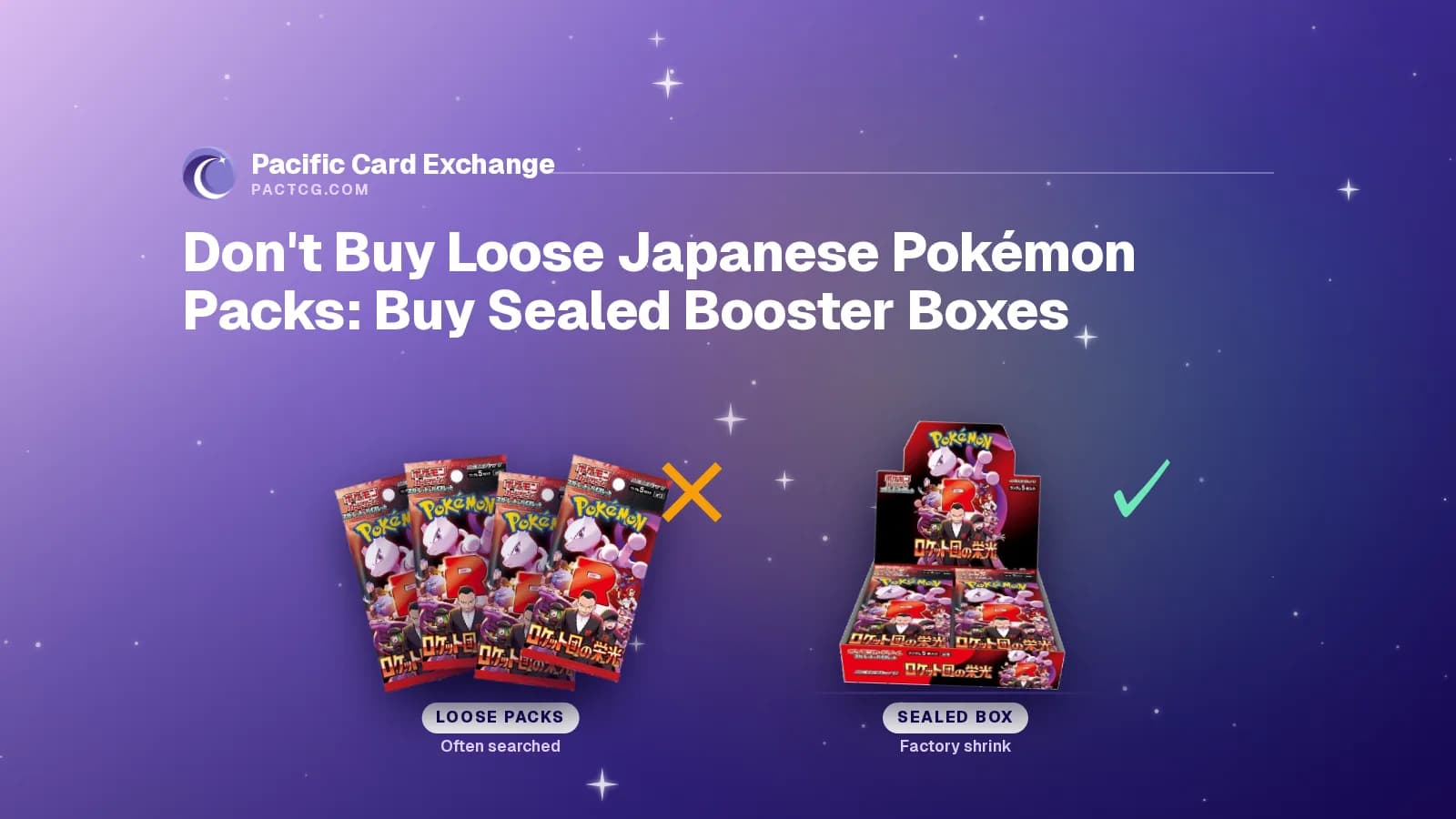
Loose Japanese packs look like the cheap, fun way into a set: a few hundred yen each, no commitment, rip and done. The problem is what you can't see. When they come from a reseller, a marketplace or a secondhand listing, loose Japanese packs are more likely than any other product in the hobby to have been searched before they reach you. Here's how that happens, the red flags to watch for, and why a sealed booster box is the safer buy. Updated Oct 13, 2026.
Why Japanese packs are so easy to search
A Japanese booster pack is small: 5 cards in a main set. A box isn't a random pile of those packs, either. Japanese boxes follow a strong pattern collectors have documented over years of openings. In a Scarlet & Violet main set, a sealed 30-pack box usually contains 1 Super Rare or better, 3 Art Rares and 4 Double Rares. MEGA-era boxes add an Item, Tool or Stadium Super Rare on top. It isn't an official promise, but it holds so reliably that collectors plan around it. Our Japanese vs English guaranteed pulls guide breaks the pattern down set by set.
That reliability is exactly what makes searching worth the effort. If you know a box holds one big hit and a handful of Art Rares, you only need to find those packs. Open a few, check the rest, pull the hits, and the leftover packs still look perfect. Sell them loose, and the buyer is paying for a chance at hits that have already been removed.
How pack searching works
Searchers use a few methods, sometimes together:
- Weighing. Holo and full-art cards can weigh slightly more than commons. With a precise scale, a searcher sorts packs into "likely hit" and "likely not" and sells the light ones.
- Partial openings. Someone opens part of a box, counts the hits already found against the expected pattern, and works out how many are left. Once the pattern is filled, the remaining packs are almost certainly hit-free.
- Physical checks. Bending, feeling or shining light through packs to spot foil cards. It's crude, but it's used.
None of this leaves an obvious mark. A searched pack is still a factory-sealed pack. It just isn't a fair one.
Red flags
- Discounted loose Japanese packs. If a seller has dozens of loose packs from a popular set below what a sealed box works out to per pack, ask why. Searched packs are often priced to move.
- "Random packs" or "mystery pack" listings. Mixed lots of loose packs from several sets are the classic home for leftovers.
- Unwrapped boxes. Japanese booster boxes come shrink-wrapped from the factory. An unwrapped box is easy to open, search and close again, which is why unwrapped boxes sell for less in Japan. A box without shrink isn't always tampered with, but it needs a seller you trust.
- Boxes with loose or missing packs. A "full box" that's short a pack or two, or has packs that don't sit flat, has been opened.
- Sellers with no track record. Feedback, history and photos of the actual item matter more than price.
For the full checklist on resealed and counterfeit boxes, read our guide on how to spot a fake or resealed Japanese booster box.
When loose packs are fine
The warning is about who's selling, not about packs themselves. Loose packs are generally a good buy from:
- Local game stores that open fresh boxes to sell packs over the counter.
- Toy stores and big-box retailers selling from their own stock.
- Japanese convenience stores (konbini) like 7-Eleven, Lawson and FamilyMart, which sell packs at retail as they arrive.
These sellers buy at wholesale, sell at retail and have nothing to gain from searching. The risk starts when packs pass through someone who does: a reseller with a scale, a marketplace seller with dozens of loose packs, or a secondhand "random packs" lot. Buying from those sources is where a factory-sealed box is the safer choice.
Japanese vs English loose packs
The risks overlap, but they aren't identical.
| Japanese loose packs | English loose packs | |
|---|---|---|
| Cards per pack | 5 in main sets | 10 |
| Per-box hit pattern | Yes, a strong documented pattern | No, every pack is random |
| Can a searched box be "solved"? | Yes. The pattern tells a searcher when the hits are gone | No. There's no fixed count to work toward |
| Weighing risk | Yes | Yes |
| Safest buy | A factory-sealed, shrink-wrapped box | A sealed box or sealed product from a trusted store |
English packs have one advantage: with no per-box pattern, there's less to gain from opening part of a box and selling the rest. Weighing still happens in English, though, so loose packs from resellers and unknown sellers are a gamble in either language.
Why a factory-sealed box is the answer
A sealed Japanese box removes the guesswork. It arrives shrink-wrapped, untouched since it left the factory, and it's the only product the hit pattern applies to. Open a full box and you can expect the spread collectors have documented, not a box someone has already picked over. Loose packs and resealed boxes get no such pattern.
It's also the fairer deal. You get every pack that came in the box, with nothing picked out first. If you want a single big card, buying it as a single is cheaper still. If you want the fun of opening, open a box.
Buy from sellers with a public track record. Our board lists live sealed-box offers from vetted Japanese sellers, so you can compare prices and buy factory-sealed product with confidence. New to importing? Start with how to buy Japanese Pokémon booster boxes.
Get The Pacific Pull
Get The Pacific Pull, our free weekly email with each new price index, Japanese release news and new guides.
Frequently asked questions
Frequently asked questions
Are loose Japanese Pokémon packs searched?
Many resold ones are. Japanese packs come from boxes with a strong hit pattern, so anyone who opens or checks part of a box can keep the hits and sell the rest loose. You can't tell from the outside.
Is it safe to buy loose packs from a store or konbini?
Generally, yes. Local game stores, toy stores and Japanese convenience stores like 7-Eleven sell packs at retail and have no reason to search them. The risk is with resellers, marketplaces and secondhand listings.
Can you weigh Japanese Pokémon packs?
People try. Weighing and other checks are used to pick out packs with heavier holo or full-art cards. It works well enough that loose packs are a real risk in both languages.
Why buy a sealed Japanese booster box instead?
A factory-sealed box arrives shrink-wrapped and untouched. It's the only way to get the box hit pattern collectors have documented, such as 1 Super Rare or better, 3 Art Rares and 4 Double Rares in a Scarlet & Violet main set.
Is a Japanese box without shrink wrap safe?
Not always. An unwrapped box is easier to open and reseal. Unwrapped boxes sell for less in Japan for that reason. Buy those only from a seller you trust.
Show all 6 questions
Are English loose packs safer?
Slightly. English boxes have no per-box hit pattern, so there's less to gain from searching a box. Packs can still be weighed, so the same caution applies.
All Pokémon images © The Pokémon Company, Nintendo, Creatures and GAME FREAK. Pacific Card Exchange is not affiliated with or endorsed by The Pokémon Company, Nintendo, Creatures, or GAME FREAK.
Sources
- PACTCG seller price board (as of 2026-10-13)

Written by
Bryce Watson
Bryce runs Pacific Card Exchange and tracks Japanese sealed Pokémon prices every day for international buyers.
More from Bryce

